Source Luxury Porcelain Tableware for dining, catering, and events
Explore 30 listings for Luxury Porcelain Tableware featuring ceramic and porcelain materials with various certifications. Buyers can compare customization options, sizes, and packaging details from suppliers in China.
Key considerations
Products List


New Design Dinnerware Luxury Ceramic Tableware Custom Porcelain Dinnerware
$0.39 - $0.89
MOQ: 2000 Pieces


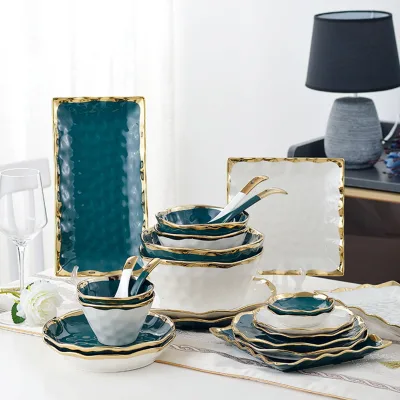

Ceramic Dinner Set-Durable Porcelain Tableware for Daily Dining & Gatherings
$20.91 - $34.76
MOQ: 1000 Sets


Comprehensive Sourcing Guide
Strategic Sourcing Framework for Luxury Porcelain Tableware
The global market for Luxury Porcelain Tableware represents a sophisticated intersection of traditional craftsmanship and modern industrial capability. For procurement professionals, sourcing high-end ceramic and porcelain products requires a nuanced understanding of material science, regulatory compliance, and supply chain logistics. The core keyword "Luxury Porcelain Tableware" implies a product category defined not merely by utility but by aesthetic refinement, durability, and the perceived value of the dining experience. This guide synthesizes observed market data and technical specifications to provide a disciplined approach to acquiring these premium goods, ensuring that buyers can navigate the complexities of international trade without compromising on quality or compliance.
Material Composition and Technical Specifications
The foundation of any luxury porcelain product lies in its material composition. Observed market data consistently identifies the primary material for this category as Ceramic and Porcelain, specifically noting "New Bone China" as a premium variant. Bone china is distinguished by its translucency, whiteness, and strength, achieved through the inclusion of bone ash in the clay body. When evaluating potential suppliers, buyers must verify the specific type of porcelain used, as the term "porcelain" can sometimes be applied loosely to stoneware or earthenware.
Technical specifications provided in current listings highlight a diverse range of product models, such as hg1x2, 4260, 16421, 4222, 4217, 4240, TMDSZQ14082601, and TMPDSH1408114. These alphanumeric codes often correspond to specific mold designs or production batches. Capacity and dimensions are critical parameters for luxury tableware, with observed sizes ranging from 240ml to 400ml for bowls and specific plate dimensions like 8-inch, 10.5-inch dinner plates, 7.5-inch side plates, and 7-inch soup bowls. Mug sizes are also standardized, with 9oz being a common specification.
The physical form of the product is equally important. The observed data indicates a preference for the "Round" shape, which is traditional for formal dining settings. However, the finish and decoration process offer significant differentiation. Available finishing techniques include Decal, Emboss, and Hand Painted options. These processes directly influence the perceived luxury of the item. Hand-painted items, for instance, command a higher price point due to the labor intensity involved, whereas decal applications offer consistency and lower costs. Buyers should request samples to verify the quality of these finishes, ensuring that hand-painted details are crisp and decals are free of bubbles or misalignment.
Compliance, Certification, and Regulatory Standards
In the international trade of food-contact ceramics, regulatory compliance is non-negotiable. The observed product attributes list a robust array of certifications, including CE/EU, CIQ, FDA, LFGB, EEC, and SGS. These certifications are not merely marketing labels but are essential for market access. The CE/EU mark indicates conformity with health, safety, and environmental protection standards for products sold within the European Economic Area. Similarly, FDA approval is mandatory for products entering the United States market, ensuring that the materials used do not leach harmful substances into food.
The presence of LFGB (German Food and Feed Code) and EEC (European Economic Community) standards further underscores the need for rigorous testing. For buyers targeting high-end retail channels, the absence of these certifications can be a deal-breaker. The data also references ISO9000 and SGS, which pertain to quality management systems and third-party inspection services, respectively. It is crucial for procurement teams to verify that the specific batch of goods being ordered carries the valid certification documents corresponding to the destination market.
Furthermore, the standard of production is often described as "Accept Customized" or "Customized," suggesting that suppliers are willing to adapt their manufacturing processes to meet specific regulatory requirements. However, buyers must not assume that a supplier's general certification covers every product variant. Verification of the specific model's compliance status is required. The origin of these products is predominantly China, with specific manufacturing hubs noted in Liling, Hunan, and Zibo, Shandong. These regions are historically significant for ceramic production, but the geographic origin does not automatically guarantee compliance; it is the supplier's adherence to the listed standards that matters.
Cost Drivers and Economic Factors
Understanding the cost structure of Luxury Porcelain Tableware is essential for budgeting and negotiation. The observed price range in the market is extensive, spanning from $0.14 to $152.37 USD. This wide variance is driven by several key factors, including the complexity of the design, the finishing technique, the material quality, and the order volume. The lower end of the spectrum likely corresponds to mass-produced items with simple decals and standard packaging, while the upper end reflects hand-painted, custom-designed sets with premium packaging.
Minimum Order Quantity (MOQ) is another significant economic driver. The observed MOQ ranges from 2 to 5000 pieces, with a specific high-confidence observation noting an MOQ of 3000 pieces for certain custom orders. This suggests that while small sample orders are feasible, achieving the lowest unit price typically requires substantial volume. The "Customized" attribute is frequently linked to higher MOQs, as the setup costs for custom molds and designs are amortized over larger production runs.
Payment terms observed in the market include TT (Telegraphic Transfer), DP at Sight, LC at Sight, and Western Union. These terms reflect the risk profile of the transaction. For luxury goods, where the value per unit is higher, buyers may prefer Letter of Credit (LC) at Sight to mitigate risk, whereas established relationships might allow for TT or DP. The packaging also influences cost; options range from bulk packs to customized color boxes and master cartons. The "General Package" often includes a color box with a master carton bulk pack, but custom packaging solutions will incur additional costs.
Supplier Evaluation and Geographic Considerations
When evaluating suppliers, the geographic location of the manufacturing facility provides valuable context regarding logistics and supply chain reliability. The primary production locations identified are in China, specifically in Liling, Hunan, and Zibo, Shandong. Liling is renowned for its ceramic industry, while Zibo is a major hub for porcelain production. Buyers should consider the logistics implications of these locations, as shipping times and freight costs will vary based on the port of origin.
Supplier credibility can be assessed through their willingness to offer OEM (Original Equipment Manufacturer) and ODM (Original Design Manufacturer) services. The data indicates that OEM/ODM is acceptable, and custom logos are available. This flexibility is a strong indicator of a supplier's capability to meet specific brand requirements. Additionally, the availability of an "OEM Sample" is a critical step in the evaluation process. Before committing to a large order, buyers should request samples to verify the quality of the "New Bone China," the accuracy of the dimensions, and the integrity of the finishes.
The "Customized" and "Non-Customized" attributes appear in the data, suggesting that suppliers may offer both standard catalog items and bespoke solutions. For luxury procurement, the ability to customize is often a priority. However, buyers must ensure that the customization process does not compromise the product's structural integrity or compliance status. The "Standard" attribute noting "8 inch plate" or "accpet customized" highlights the need for clear communication regarding specifications. A supplier that can accommodate custom standards while maintaining ISO9000 and SGS quality controls is ideal.
Quality Control and Packaging Integrity
Quality control in the porcelain industry extends beyond the initial manufacturing process to the packaging and shipping stages. The observed product attributes list various packing methods, including "Packing Boxes," "Carton," "Bulk Pack," and "Customized Color Box." The "Regular Pack" often specifies 1 set per color box and 2 sets per carton, which is a standard practice for protecting delicate items during transit.
For luxury tableware, the packaging must be robust enough to prevent chipping and breakage. The "General Package" description mentions "Color Box, Master Carton Bulk Pack," which implies a two-layer protection system. Buyers should verify that the internal packaging includes sufficient cushioning, such as foam or paper inserts, to absorb shocks. The "Disposable" attribute is noted as "Non-Disposable," confirming that these are durable goods intended for repeated use, which necessitates high-quality packaging to ensure they arrive in pristine condition.
Inspection protocols should be rigorous. Given the presence of certifications like SGS, buyers should consider engaging third-party inspection services before shipment. This is particularly important for custom orders where the "Hand Painted" or "Decal" finishes require visual inspection to ensure consistency. The "Description" of the product as "Chinese Luxury Porcelain Ceramic Tableware" sets a high expectation for visual perfection. Any defects in the glaze, color, or shape must be addressed before the goods leave the factory.
Long-Term Procurement and Relationship Management
Sourcing Luxury Porcelain Tableware is not a one-time transaction but a long-term partnership. The "Payment Term" options and the "Custom Logo" availability suggest that suppliers are looking for recurring business. Establishing a relationship with a supplier that offers "OEM Sample Offered" and accepts "Customized" orders can lead to better pricing and priority production scheduling.
Buyers should also consider the sustainability aspect, as the "Eco-Friendly" feature is listed among the product attributes. This may refer to the use of sustainable materials in the clay body or eco-friendly packaging solutions. In an era where corporate social responsibility is paramount, selecting suppliers who prioritize environmental standards can enhance the brand image of the buyer.
Finally, the "Customized" nature of the standard and the availability of various product models (e.g., 4260, 16421) indicate a dynamic market. Buyers should maintain open communication with suppliers to stay updated on new designs and technologies. The ability to adapt to changing market trends, such as shifting consumer preferences for specific shapes or sizes, will be a key differentiator in the long-term success of the procurement strategy. By focusing on these strategic elements, buyers can secure a reliable supply of high-quality Luxury Porcelain Tableware that meets both functional and aesthetic demands.
FAQs
What certifications are required for Luxury Porcelain Tableware?
Luxury Porcelain Tableware typically requires CE/EU, FDA, CIQ, LFGB, and EEC certifications for international trade. These standards ensure safety for food contact and compliance with European and American regulations. Buyers must verify that specific product batches carry valid documents matching their destination market requirements.
Which customization options are available for ceramic tableware?
Customization is available for logos, designs, and specifications including custom molds and finishes like decal or hand painting. Suppliers accept OEM and ODM requests, allowing for tailored packaging and product models. However, custom orders often require higher minimum order quantities to amortize setup costs effectively.
How does the MOQ affect pricing for porcelain sets?
Minimum order quantities range from 2 to 5000 pieces, with some custom orders requiring 3000 pieces. Higher volumes generally secure lower unit prices, while small sample orders may cost more per unit. The MOQ directly influences the final cost structure and negotiation leverage for bulk buyers.
Can I find Luxury Porcelain Tableware from specific Chinese regions?
Yes, manufacturers are located in Liling, Hunan, and Zibo, Shandong, which are known ceramic production hubs. These regions offer access to specialized factories with varying capabilities in bone china and porcelain. Buyers should consider logistics and shipping times when selecting suppliers from these specific geographic locations.
What payment terms are standard for sourcing this tableware?
Standard payment terms include TT, DP at Sight, LC at Sight, and Western Union. These options allow flexibility based on the transaction value and established trust between buyer and seller. For high-value luxury goods, Letter of Credit is often preferred to mitigate financial risk during international shipments.
How are luxury porcelain items packaged for shipping?
Items are packed in color boxes, master cartons, or bulk packs depending on the order type. Standard packaging often includes one set per color box and two sets per carton to prevent breakage. Customized packaging is available but may incur additional costs and require specific design approvals before production.